This post was originally published on my SubStack on February 25, 2026.
In “The Other Side of Things,” I wrote about returning to art-making after a ten-year hiatus. What surprised me is that some things apparently never left.
I’ve been looking back at work from the mid-2000s — pieces made in my Santa Cruz Mountains studio — and noticing something I never consciously chose. The same shapes keep appearing: circles, and what I’ve come to think of as the stadium form — straight sides with half-circles at top and bottom, like a racetrack or an elongated zero.
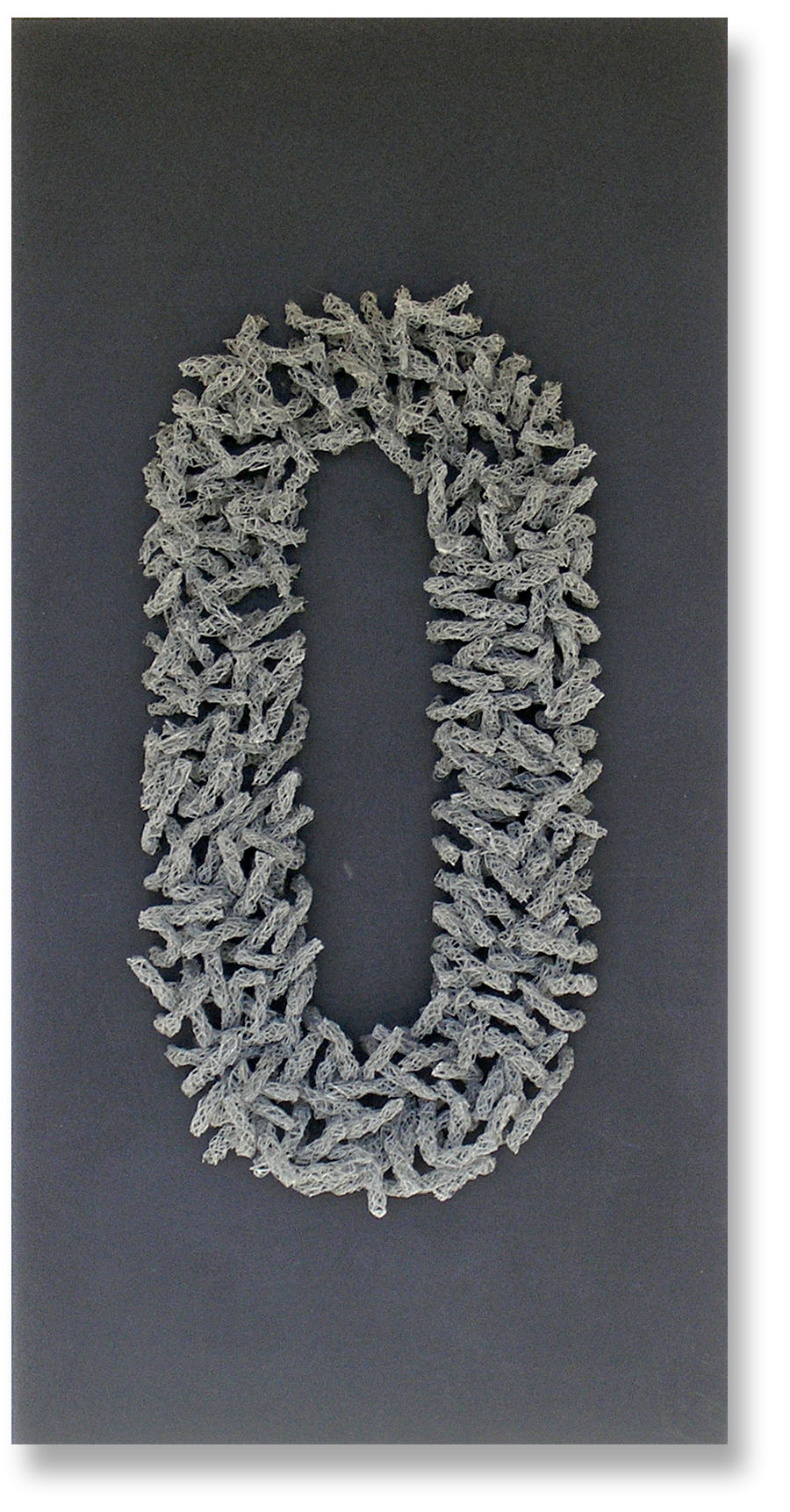
Here’s a piece from 2007. Chicken wire, cut into strips, rolled into small tubes, and arranged into that stadium shape against a dark ground.
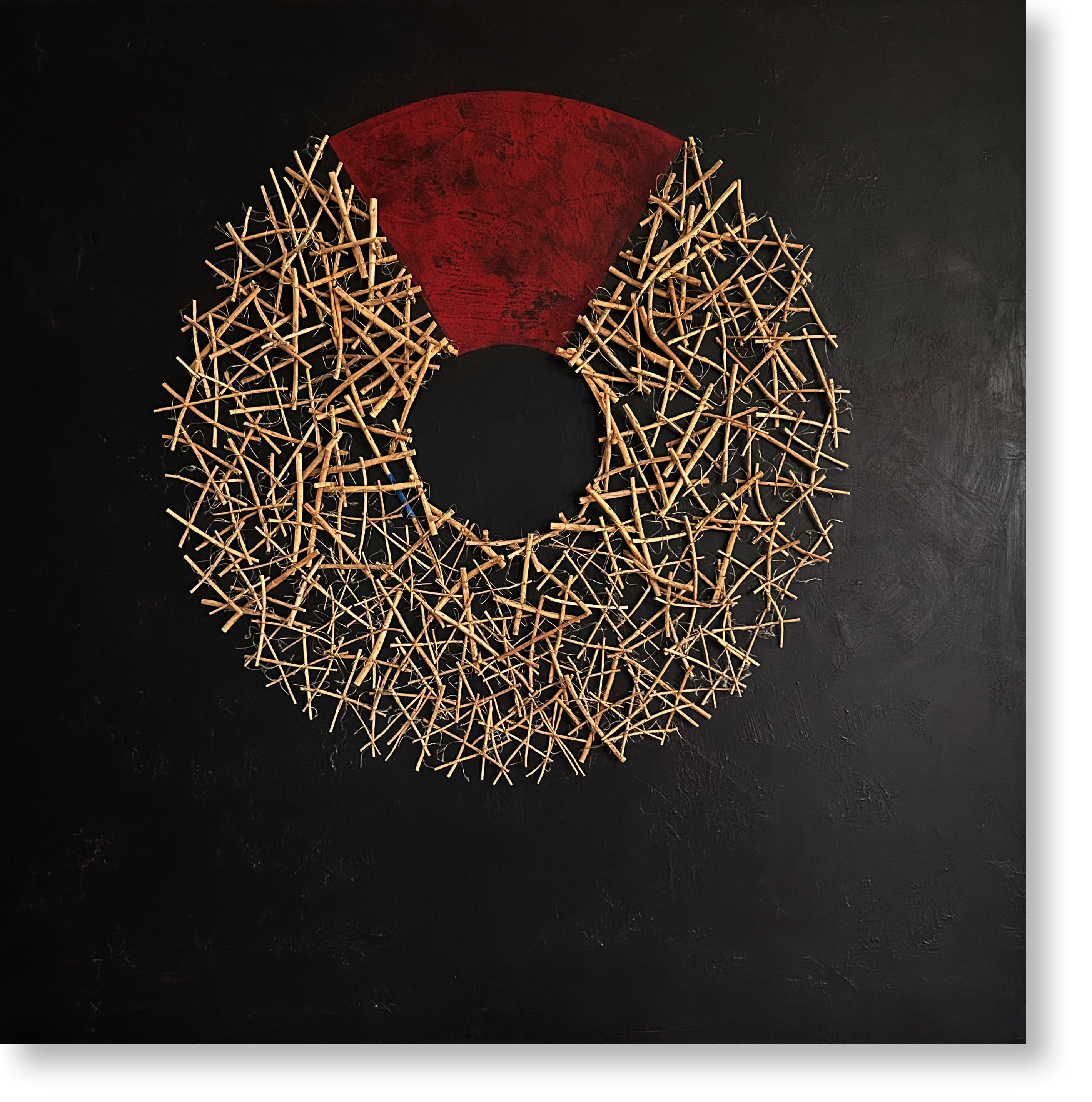
And here’s one from 2005. A circle made from ‘naked’ redwood sticks, with a red wedge breaking into the form. I’d find them on my walks after a wet storm on Kings Mountain. The streets would be littered with them. If you look closely, you’ll find a single stick with a blue center—a quiet interruption that rewards closer inspection.
I never sat down and decided these would be my shapes. They just kept showing up. The hands made what the hands wanted to make, and only now, looking back, do I see the pattern.
Where does this come from?
I grew up in Gelsenkirchen, in Germany’s Ruhr Valley. Coal mines, steel plants, smog warnings. But for anyone from Gelsenkirchen, there’s another defining presence: Schalke 04.
Schalke is the football club — founded in 1904, back when Gelsenkirchen was building itself on coal. The stadium was the heart of the city. First the Glückauf-Kampfbahn, then the Parkstadion where I watched matches as a kid, now the Veltins-Arena. That shape — the elongated oval, straight sides curving into half-circles at each end — wasn’t just architecture. It was where 70,000 people came together, where you belonged to something larger than yourself, where a working-class city found its identity.
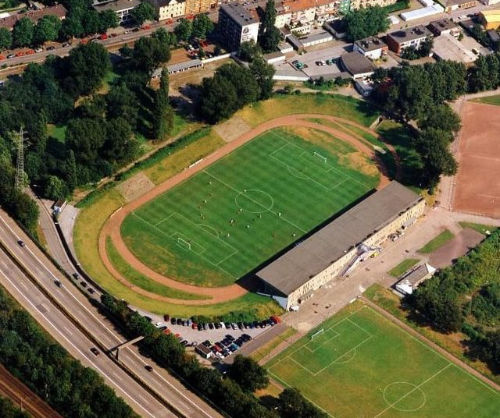
Glück auf — the traditional miners’ greeting, wishing safe return from the pit — became the club’s rallying cry. The stadium and the mine shared the same prayer.
So when I find myself building that stadium form out of chicken wire or laminated cardboard, I’m not working from some abstract appreciation of German industrial design. I’m reaching back to something more specific: the shape that meant community, belonging, and home. The form is in my bones. I didn’t choose it. It chose me.
The circle carries its own weight. Wholeness, completion, the endless return. The geometry of flywheels and gears — industrial forms, yes, but also ancient and universal. Maybe I absorbed these shapes the way you absorb a native language, without instruction, just by being immersed.
What interests me now is that after ten years away from the studio, the same shapes are reasserting themselves — but differently.
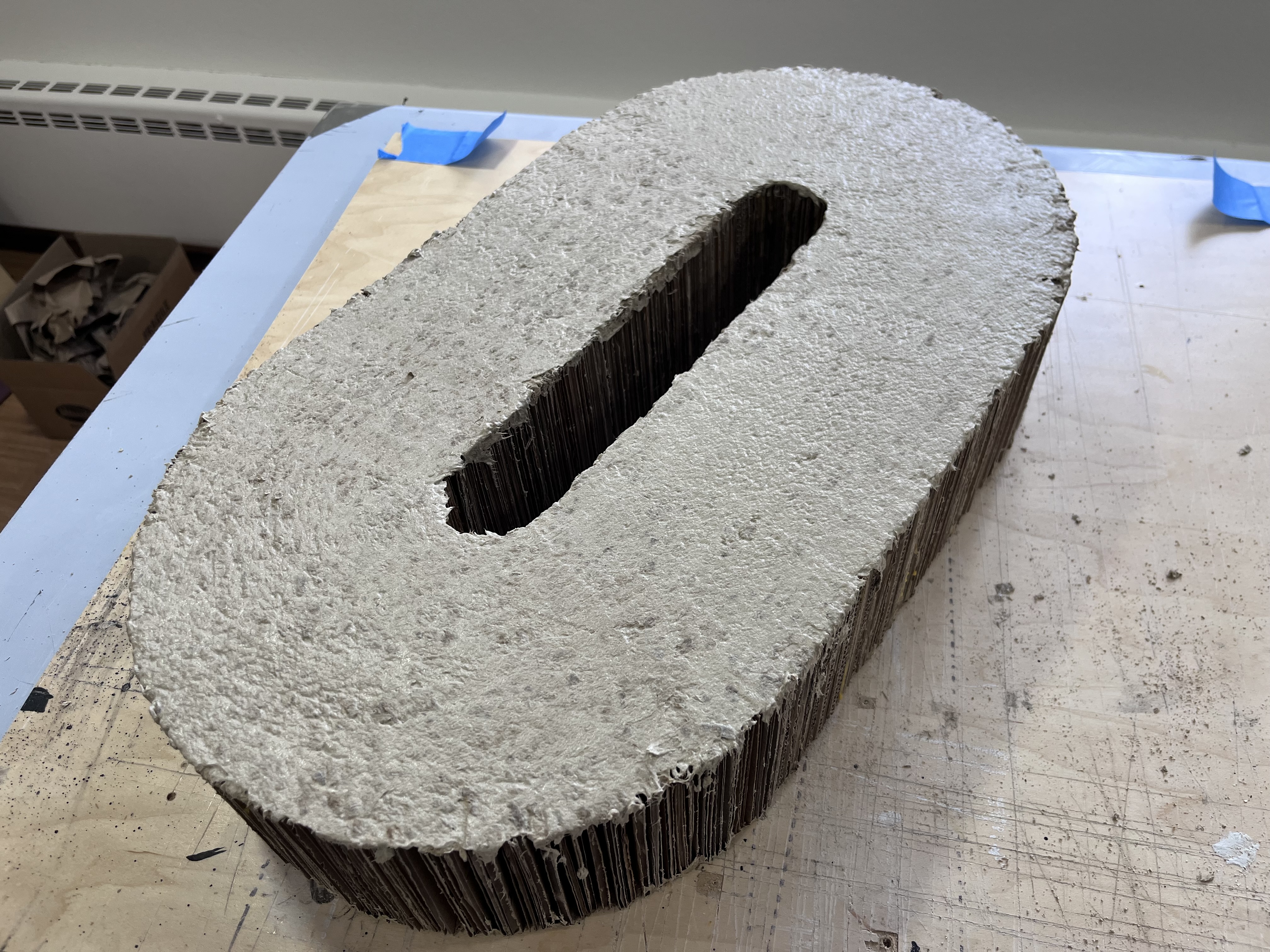
These new pieces are built from laminated cardboard, coated with cardboard clay. They have real depth — four inches — compared to the earlier flat assemblages. The forms haven’t changed, but they’re pushing into three dimensions now, demanding more physical presence.
The earlier chicken-wire pieces were about accumulation—many small rolled units arranged together. The cardboard work is about building up continuous layers, carving out negative space. Different processes arriving at the same destination.
The stadium piece currently in progress is roughly 14 by 22 inches and 4 inches deep. The circle will be about 24 inches in diameter with a 6-inch center void. Both are intended for wall mounting, but their depth means they’ll cast shadows and occupy space in ways the earlier work didn’t.
I’m not sure what the final surface treatment will be. The earlier pieces had color interventions — a red wedge, a single blue element — small disruptions to break the monotony. Whether these new pieces need something similar, I don’t know yet. Part of staying open to the work is not deciding everything in advance. Something I see tomorrow might change the direction entirely.
What I do know is that these shapes aren’t going anywhere. They were there twenty years ago, they’re here now, and they’ll probably keep showing up as long as I keep making things. Some obsessions you choose. Others choose you.
Glück auf.