This post was originally published on my SubStack on January 10, 2026.
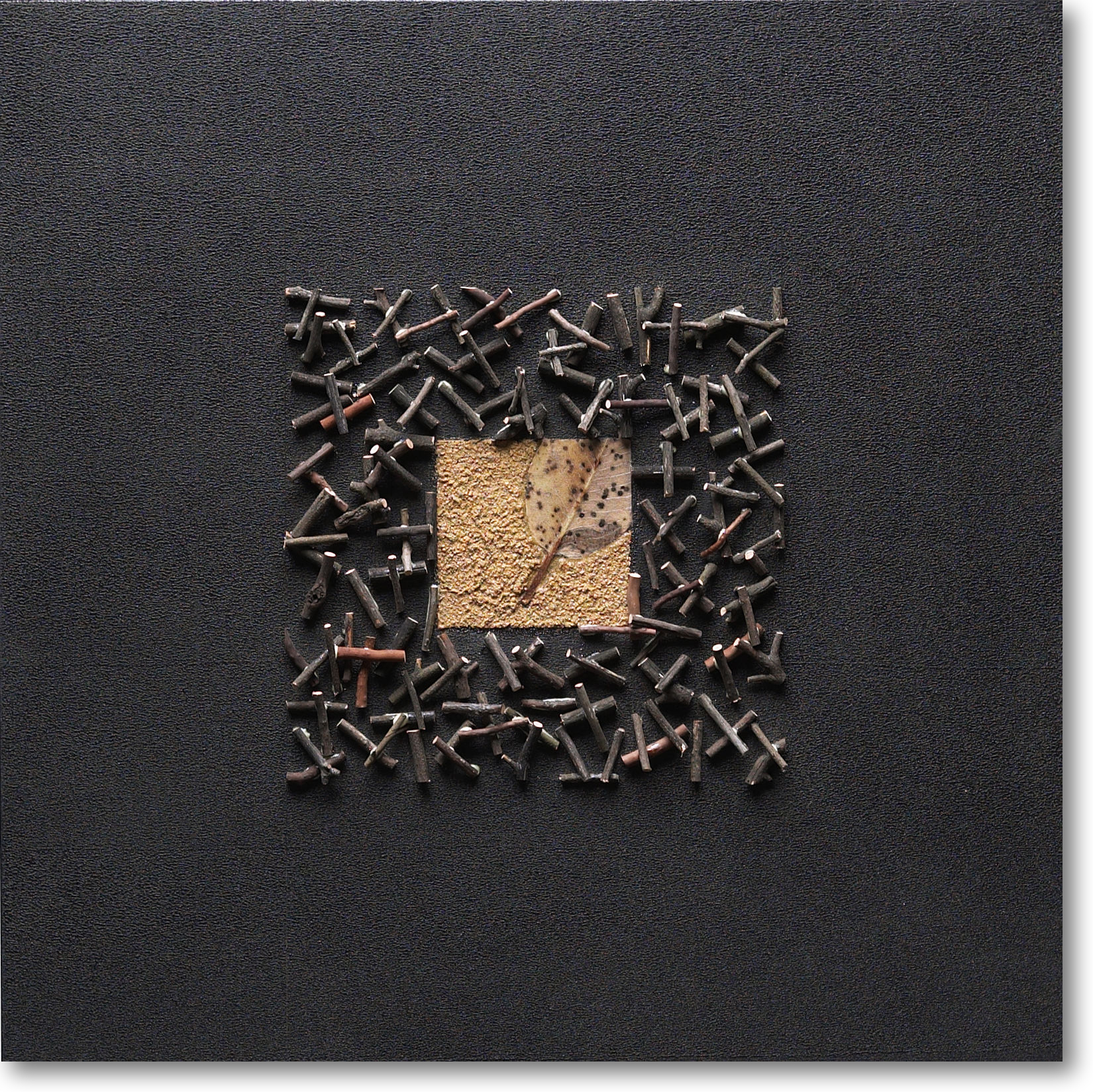
My life as an artists began when I moved to the Santa Cruz Mountains. One day, while walking near my home, I spotted a fallen madrone leaf. It was dying - yellow and green, speckled with tiny black spots from disease - and absolutely beautiful. I thought "this really wants to be framed". That’s when I started experimenting.
I grew up in Gelsenkirchen, an industrial town in Germany’s Ruhr Valley: coal mines, steel plants, smog warnings. My father was a coal miner. There was no money for museums. But I was always building things - basket weaving and painting in a youth group, then an apprenticeship as an electrician, then an electrical engineering degree. I’ve been an artist all my life, but I wouldn’t have used that word.
When I moved to California in 1981, I made wire sculptures for years, but nothing serious came of it. The Santa Cruz Mountains changed that. The natural surroundings, the close-knit community of mountain folk, many of them artists themselves - something ignited. The dying madrone leaf gave me a way in.
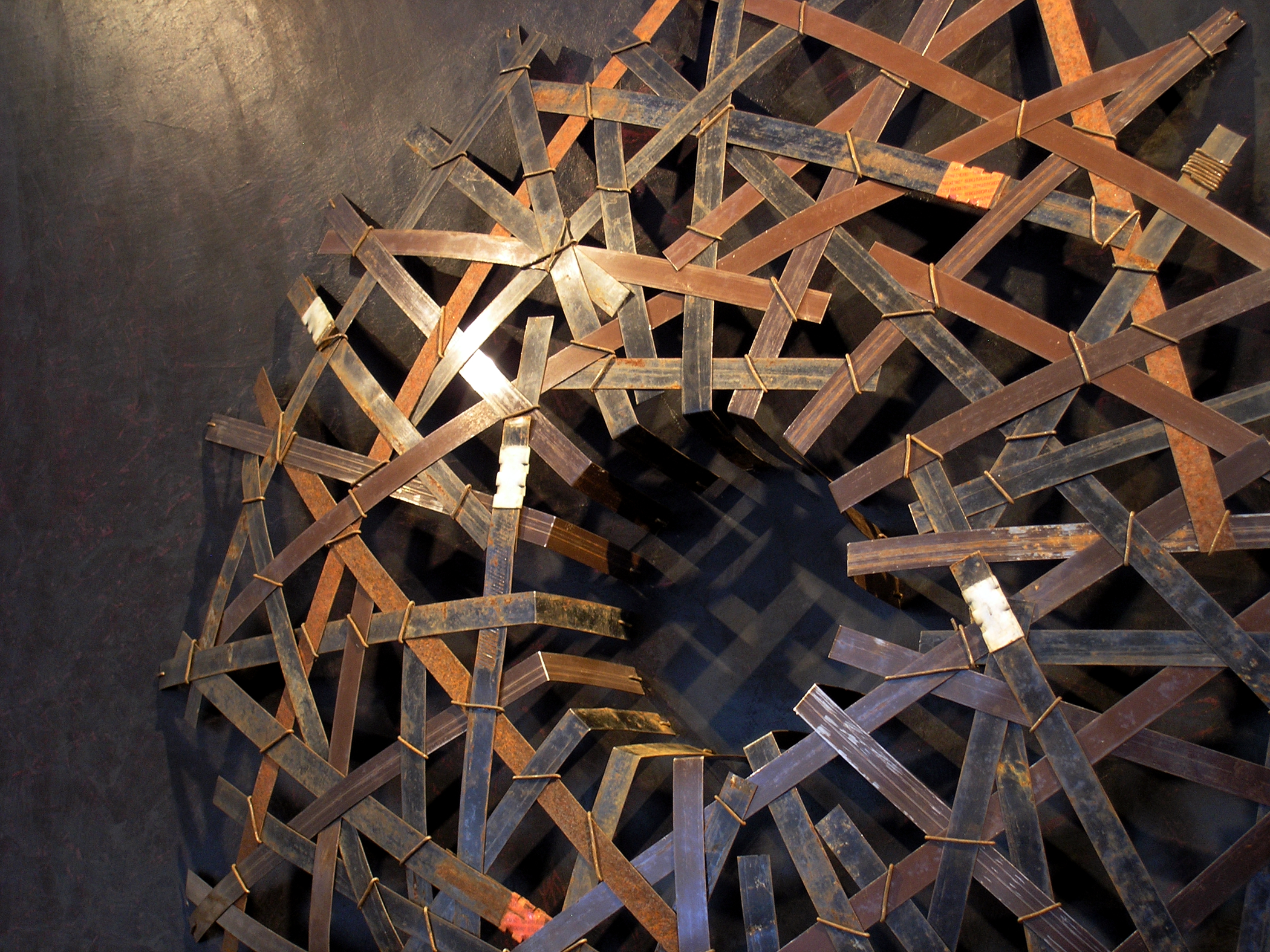
The work I made drew from two influences that shouldn’t fit together but somehow do: the industrial landscape of my childhood and the Japanese-influenced minimalism I absorbed in Northern California. Metal banding from construction sites next to pressed leaves. Rusted fence wire against river stones. The tension between industrial and organic became the point.
Showing the work Over the next decade, I exhibited at the Peninsula Museum of Art, Stanford Art Spaces, the Mountain View Center for the Performing Arts, the German Consulate in San Francisco, the Triton Museum, galleries in Sausalito and San Jose. My work ended up in private collections in the US, Japan, and Europe.
Then life intervened—career demands, a cross-country move, the weight of daily obligations. The studio went quiet. For ten years, I didn’t make art.
Coming back
I thought I was done. Then a friend’s emails about her own creative process stirred something. The desire to make things - I’d assumed it had quietly retired along with me. It hadn’t. It was just waiting.
My wife and I moved to Minneapolis a few years ago. Recently, I found a studio space at the Center for People and Craft, an urban folk school in the Loring Park neighborhood. It’s modeled on the historic Danish folk school tradition—community connection, traditional crafts, and intergenerational learning—the right place to start again.
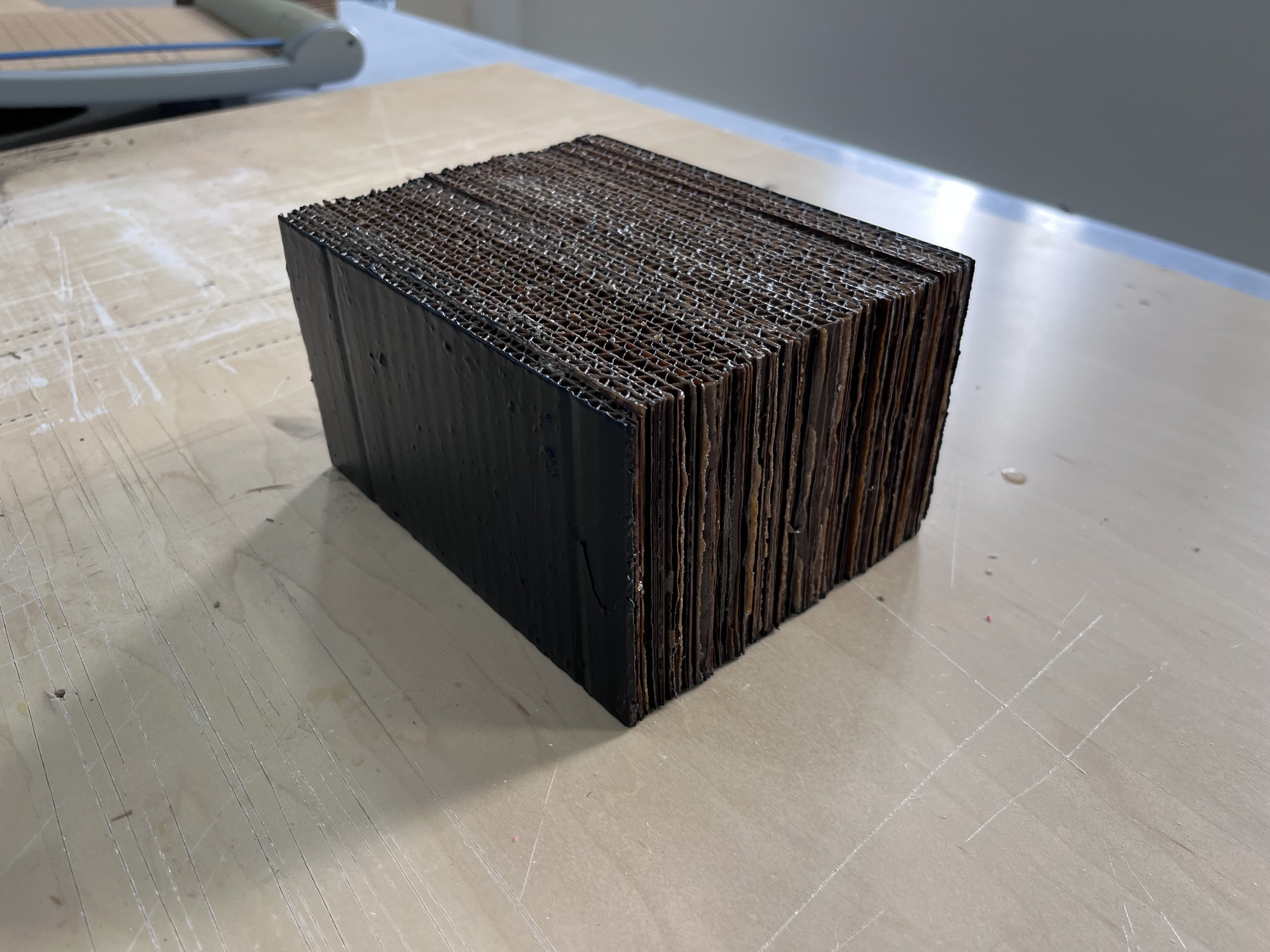
I’m experimenting with materials people don’t typically associate with serious art. Cardboard. Paper mâché clay. Hardware store finds. The raw edges and surface texture of corrugated cardboard react to light in ways that interest me. Part of this new phase is taking humble materials seriously - finding out what they can do, what they want to become.
Two practices, same thinking
Writing this, I notice the overlap between how I approach web development and how I approach art. Both are about working with constraints. Both prefer simplicity to complexity. In the Metalsmith series, I’ve argued for using the platform - native web technologies over framework abstractions, stability over churn. In the studio, I use found materials rather than expensive art supplies, letting the materials’ character show rather than hiding it.
There’s also something about building things from components. A Metalsmith page assembles sections: hero, text block, media, and call to action. An assemblage arranges elements - metal, wood, stone, and leaf. Both are acts of composition, finding relationships between parts.
OK, that might be a stretch. Maybe they’re just two things I do. But the impulse feels the same: make something coherent from discrete pieces, keep it honest, get out of the way.
Where to find the work
My art portfolio is at wernerglinka.com. The studio notes section tracks what I’m working on now - the return to practice, the new materials, the pieces taking shape.
The web development side stays at glinka.co. The Metalsmith Redux series will continue here.
Two practices, same person. Thanks for following along with one of them. Now you know about the other.